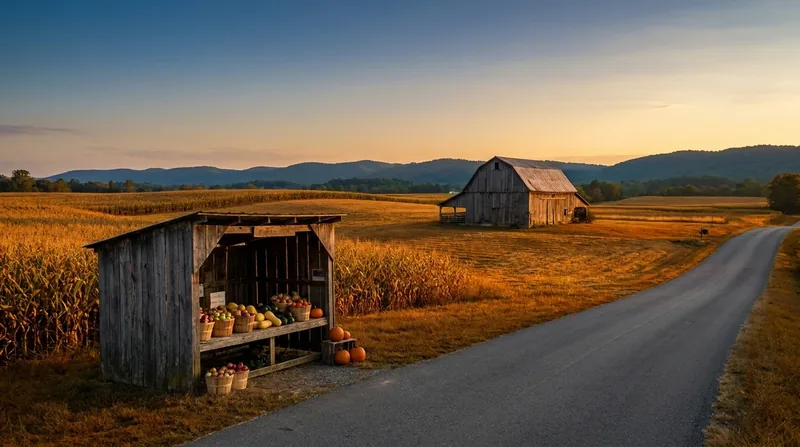
How to Start a Farm or Agritourism Business in Georgia: Agritourism Registry, Sales Tax and Farmers Markets
How to Start a Farm or Agritourism Business in Georgia: Agritourism Registry, Sales Tax and Farmers Markets
Georgia does not issue a single farm license. The registrations you need depend on three things: what you grow or make, how you sell it, and whether visitors come onto the property. A farm selling eggs from a roadside stand has a different checklist than a farm that runs school tours, a pumpkin patch and a Saturday jam booth. This guide maps the state and local steps most farm and agritourism operators run into, with the agency to contact for each one. It is a map, not a full manual. Wherever a fee is not listed here, the text tells you to confirm it with the agency.
What You Need Before You Start
- A list of every product you will grow, process or sell, and where you will sell it
- A simple map of the property showing parking, trails, animal areas and any event space
- A business name you can use legally, plus your entity choice (sole proprietorship, LLC or corporation)
- A federal Employer Identification Number from the IRS if you plan to hire employees or form a multi-owner entity
- Contact information for your county tax assessor, your county planning office and, if you are inside city limits, your city clerk
- Insurance quotes, including general liability coverage and, if you will have three or more workers, workers' compensation
Step 1: Sort Your Operation Into Categories
Before you file anything, decide which of these describes your farm. Most operations fall into more than one.
- Selling raw farm products at a farm stand, market or farm gate: sales tax registration and a local occupation tax certificate.
- Hosting visitors for recreation, education or entertainment: the Agritourism Registry, a local certificate, insurance and a zoning check.
- Making jams, breads or other home-made foods: cottage food rules, market rules and local rules.
- Serving prepared food on site: food licensing.
- Running a campground, RV park, stable or animal boarding: specific permits from the county or the state (see the table in Step 7).
Step 2: Form the Business Entity and Register Any Trade Name
A sole proprietorship does not require a Secretary of State filing. An LLC or corporation does. The LLC Articles of Organization and the corporation Articles of Incorporation each cost $110 total, which is the $100 filing fee plus a $10 service charge, whether you file online or on paper. Online filings take about 7 to 10 business days and paper filings about 15 business days. Expedited review costs $120 for 2 business days, $275 for same-day service if received by noon, or $1,200 for one hour on business days. File through the Secretary of State's eCorp portal at ecorp.sos.ga.gov. A name can be reserved for 30 days for $35.
After formation, an LLC files its first annual registration in the year after it forms. A corporation files within 90 days of incorporating. Annual registration costs $60 ($50 plus a $10 service charge) and is filed between January 1 and April 1 each year. A late filing carries a $25 penalty. Confirm the current window with the Secretary of State at sos.ga.gov/corporations-division.
On tax, a typical single-member or partnership LLC pays no Georgia franchise tax. Corporations, and LLCs taxed as corporations, pay a net worth tax of $0 to $5,000 depending on net worth. Income passes through at one flat rate: 5.19% for 2025 and 4.99% for 2026.
If you run the farm under a name other than your own or your entity's legal name, you need a trade name registration, often called a DBA. Trade names are not filed with the Secretary of State. They are filed with the Clerk of Superior Court of the county where the business is chiefly carried on. Expect a clerk fee of about $165 plus a newspaper notice published once a week for two weeks. Confirm the exact amount with your county clerk. The Secretary of State's business division FAQ covers the basics.
An LLC is a common choice for farms that host visitors, but the right structure depends on ownership, land and liability exposure. Read the Georgia LLC guide, then confirm your choice with an attorney or CPA.
Step 3: Apply for the Georgia Agritourism Registry
The Georgia Department of Agriculture lets agritourism venues apply to be recognized as an Agricultural Tourist Attraction. An eligible venue offers the public recreational, educational or entertainment experiences connected to agriculture, and it must meet all federal, state and local compliance requirements. Once the Department approves the application and the registry fee is paid, the venue is added to the Georgia Agritourism Registry and receives an official certificate.
The registry fee is not listed here. Check the Department of Agriculture's agritourism page for the current amount and application steps.
Gather your local paperwork before you apply, because the venue must meet local requirements too. That means your occupation tax certificate, zoning confirmation, insurance and any food license that applies to your operation.
Do not assume the registry protects you from visitor injury claims. Carry general liability insurance, and have a Georgia attorney review your waivers, ticket language and signage before you open to the public.
Step 4: Register to Collect Sales Tax
Retail sales of farm products are taxable wherever they are sold, under Department of Revenue Rule 560-12-2-.39. If you sell eggs, produce, honey, plants or prepared goods at retail, register as a dealer on the Georgia Tax Center at gtc.dor.ga.gov. Registration is free. Sales tax registration is not a business license, so you still need the local certificate in Step 5.
Georgia's state sales tax rate is 4%. Combined state and local rates run from 6% to 9% depending on county and city, and Atlanta's combined rate is 8.9%. Keep these points in mind:
- Ask the Department of Revenue, at dor.georgia.gov, which exemptions apply to the farm inputs you buy. Do not assume an input purchase is tax-free without confirmation.
- Georgia issues no separate resale permit. When a business buys goods to resell, it gives you Form ST-5, the certificate of exemption. Keep these forms on file.
- If you sell online and ship to Georgia buyers, check the remote seller threshold. Collection is owed once you reach $100,000 of Georgia sales or 200 separate transactions.
Step 5: Get the Local Occupation Tax Certificate
Georgia has no statewide business license. The Secretary of State issues none, and sales tax registration is not a license. The local license is an occupation tax certificate, often called a business license, issued under O.C.G.A. Title 48, chapter 13.
A city issues the certificate to businesses inside its limits. The county issues it for unincorporated areas. A business inside a city pays the city, not the county. More than half of Georgians live outside any city, so for many farms the county is the issuer. Each of Georgia's 159 counties and about 537 cities sets its own formula, deadlines and prerequisites, so one farm's answer does not carry over to another.
Farm stand sales need this certificate too. Private employers with more than 10 employees must also file an E-Verify affidavit to get it (O.C.G.A. 36-60-6).
Find out whether your property sits inside city limits before you apply. Your county planning office can answer that quickly, and the answer decides which office you visit.
Step 6: Handle Farmers Market and Processed Food Rules
Farmers markets. Many markets require vendors to hold a Georgia Department of Agriculture Food Sales Establishment license, even for cottage food products. Ask the market manager before you pay a booth fee. Also ask about insurance certificates, product rules and any local certificate the market expects to see.
Cottage foods. Since July 1, 2025, Georgia no longer requires a state cottage food license for jams, breads and similar home-made items under HB 398. Market rules and local business licensing and zoning still apply. For the full picture, read our cottage food business guide.
Prepared food on site. A farm kitchen, cafe or food truck at the venue moves into food licensing. Read our food business permit guide before you serve anything.
Georgia Grown. Georgia Grown, a division of the Department of Agriculture, runs a branding and marketing program that supports producers, agritourism operators and retailers. Check with Georgia Grown for eligibility.
Step 7: Check Commodity and Specialty Licenses
Only some farms need these. Use the table to see what might apply to you, then confirm with the agency listed.
| Activity | License or program | Cost | Confirm with |
|---|---|---|---|
| Poultry dealer | Poultry dealer license | $35 a year | Georgia Department of Agriculture |
| Pecans | Pecan rules at Rule 40-7-7 | Check with the Department | Georgia Department of Agriculture |
| Peaches, eggs, peanuts and other commodities | Commodity programs and commissions | Check with the Department | Georgia Department of Agriculture |
| Saltwater fishing guide | Saltwater fishing guide license (O.C.G.A. 27-2-23.2) | $25 for residents | Georgia Department of Natural Resources (statute text is older; verify) |
| Campgrounds and RV parks | County board of health permit under Department of Public Health Rule 511-6-2 | Check with the county board of health | County board of health |
| Equine stables and pet boarding | Ask which license applies | Check with the Department | Georgia Department of Agriculture |
Step 8: Confirm Zoning and Land Use
Agricultural zoning, preferential property tax assessment programs such as conservation use, and events on farmland are local matters. Check with the county tax assessor and the county planning office. Ask them:
- Is agritourism or farm retail allowed on your parcel, and does it need a special use permit?
- Do events, parking, signage or restrooms require any local approval?
- Will a new visitor use affect your conservation use or other preferential assessment?
This guide does not state acreage minimums or tax percentages, because those vary by program and by locality. Get the answers in writing when you can.
Step 9: Set Up Insurance, Workers' Compensation and Labor Rules
- Insurance. Get general liability coverage before you open to visitors. Ask your agent whether the policy covers special events and animal contact.
- Workers' compensation. Required at three or more workers, and part-time workers count. Seasonal pickers and weekend staff count too.
- E-Verify. Private employers with more than 10 employees must file an E-Verify affidavit to get the local occupation tax certificate (O.C.G.A. 36-60-6).
- Paid leave. Georgia has no state paid sick leave or family leave mandate.
- Farm labor rules. Check with the Georgia Department of Labor on the wage, hour and farm labor rules that apply to your workers.
Expected Results
Completing these steps does not guarantee visitors, sales or profit. What it does is put your operation on the right record. A venue that finishes its registry application and holds the local certificate may be able to show customers, market managers and lenders that its paperwork is in order. A registry listing may help visitors find you, but it is not a promise of traffic.
Tips
- Call the county first. The tax assessor and planning office can answer most of your local questions in one visit.
- Keep a licensing binder with your filing receipts, certificates, the ST-5 forms customers give you and your annual registration confirmation.
- Put April 1 on your calendar every year for the Secretary of State annual registration.
- Ask the Georgia Small Business Development Center at the University of Georgia for planning help at georgiasbdc.org.
Common Mistakes to Avoid
- Looking for one farm license. Georgia has none, so build your list from the categories in Step 1.
- Filing a farm trade name with the Secretary of State. Trade names go to the Clerk of Superior Court in the county where the business is chiefly carried on.
- Searching for a statewide business license. The local occupation tax certificate is the license most farms need.
- Paying the county when your property is inside city limits, or paying the city when it is not.
- Treating the agritourism registry as liability protection.
- Missing the January 1 to April 1 annual registration window for your LLC or corporation.
- Assuming farm stand sales are exempt from sales tax.
- Reading "no state cottage food license" as "no market rules." Markets can still require a Food Sales Establishment license.
- Miscounting workers. Part-time and seasonal staff count toward the three-worker workers' compensation threshold.
Where to Confirm Current Details
- Georgia Secretary of State, Corporations Division: sos.ga.gov/corporations-division
- Georgia Tax Center for sales tax registration: gtc.dor.ga.gov. Georgia Department of Revenue: dor.georgia.gov
- Georgia Department of Agriculture: agritourism registry, poultry, commodity programs, Food Sales Establishment licenses and Georgia Grown
- Georgia Department of Natural Resources: saltwater fishing guide license
- Georgia Department of Labor: farm labor rules
- County tax assessor, county planning office and county clerk (trade names), and the county board of health (campgrounds)
- Georgia Small Business Development Center at the University of Georgia: georgiasbdc.org
Disclaimer
This article is informational and is not legal or tax advice. Rules, fees and deadlines change, and the agencies named above are the final authority. Farms with employees, multiple owners, conservation-use land or visitor-facing operations benefit from review by a Georgia attorney and a CPA before they open.