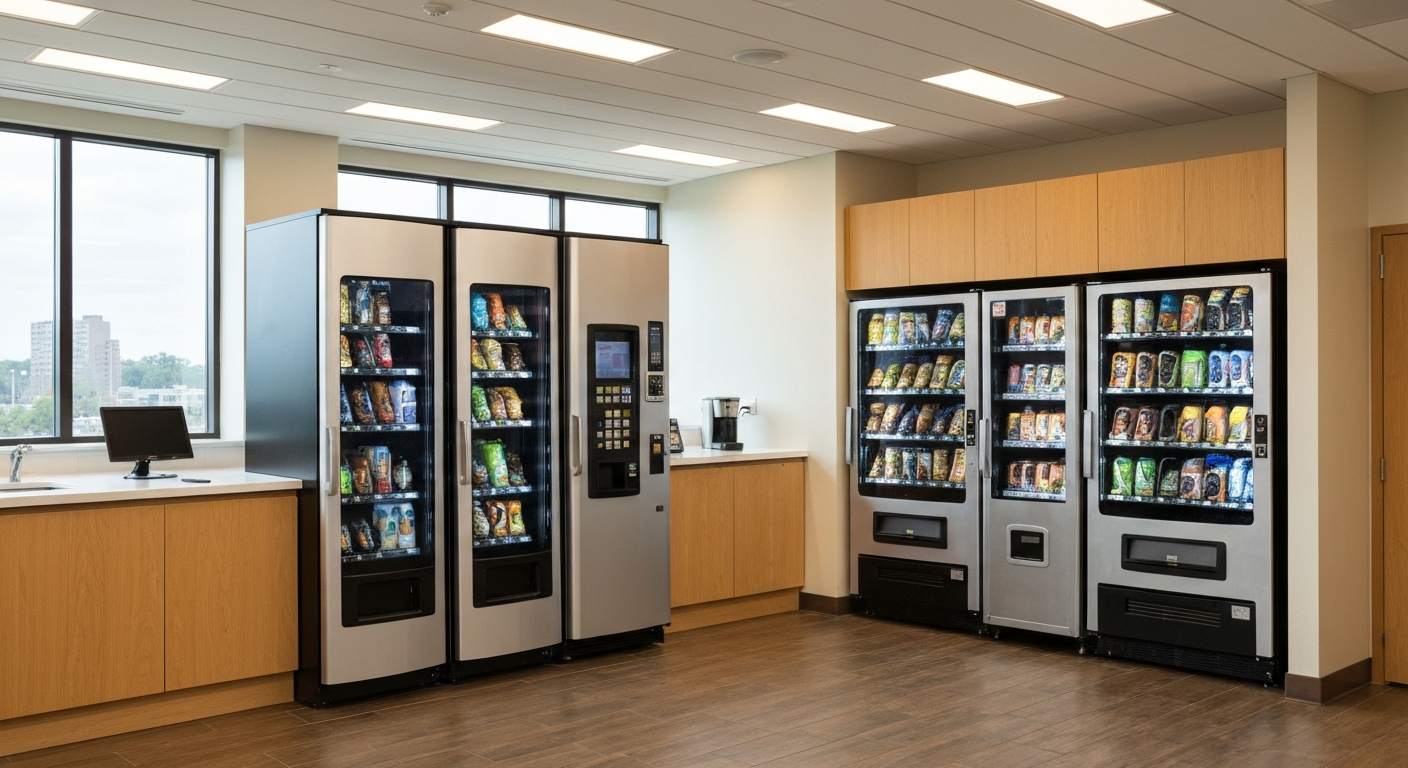
How to Start a Vending Machine Business in Georgia
How to Start a Vending Machine Business in Georgia
Georgia has no statewide vending operator license. That’s the good news. You don’t need to pass an exam, apply to a state board, or wait on approval from the Secretary of State just to put a snack machine in a break room.
But “no state license” doesn’t mean “no compliance.” Your real obligations come in three layers: state sales tax registration, local occupation tax certificates in every jurisdiction where you place machines, and — depending on what you’re selling — county health department permits. Get those three right and you’re operating legally. Miss them and you’re looking at back taxes, fines, and machines getting pulled.
Here’s exactly how to build it out, from first machine to a full route.
Do You Need a License for Vending Machines in Georgia?
Not from the state — but yes from your local government, and possibly from your county health department.
State level: Georgia doesn’t have a vending-specific operator license. The only required state registration for most vending operators is sales tax registration through the Georgia Tax Center (more on that below). That registration is free.
Local level: Every city and county in Georgia handles business licensing independently. If you’re placing machines in Atlanta, you need a City of Atlanta Occupation Tax Certificate. Machines in unincorporated Gwinnett County? Gwinnett County Occupation Tax Certificate. Each jurisdiction you operate in requires its own certificate, and fees vary widely by location and business classification.
This catches people off guard. You might have machines in three different counties — that’s three separate occupation tax filings, three separate fees, and three separate renewal cycles.
E-Verify and SAVE affidavits: Here’s what catches most Georgia entrepreneurs completely off guard — and it applies to you even if you’re a one-person operation with two vending machines.
Georgia law requires two affidavits with every business license or occupation tax certificate application:
- SAVE Affidavit (Systematic Alien Verification for Entitlements): You must verify your lawful presence in the United States. This requires notarization and a Secure and Verifiable Document (driver’s license, passport, etc.). Required under O.C.G.A. § 50-36-1.
- E-Verify Affidavit: If you have 11 or more employees, you must be registered for E-Verify and provide your user number. If you have fewer than 11 employees — including if it’s just you — you file an exemption affidavit instead. Required under O.C.G.A. § 36-60-6.
These aren’t optional. They’re mandatory statewide for all business license applications, including occupation tax certificate applications. Show up to your county office without them and you’re leaving without a certificate. Every county clerk in Georgia knows to ask for them.
Food machines: If your machines dispense potentially hazardous foods — refrigerated items, hot food, anything that requires temperature control — you need a food service permit from the county health department where each machine is located. This is your most significant regulatory layer beyond sales tax.
Shelf-stable snacks (chips, candy, crackers) and sealed beverages in sealed factory containers? Generally no health permit required. The key question is temperature control. If your machine needs to keep something cold or hot to keep it safe, the county health department is involved.
Business Structure and Sales Tax
Form your LLC first. You can operate as a sole proprietor, but an LLC puts a wall between your personal assets and any business liability — a customer claims they got sick from a product in your machine, for instance. Georgia LLC formation is $100 online at ecorp.sos.ga.gov. That’s the filing fee. After that, you owe $60 per year in annual registration fees (a $50 fee plus a mandatory $10 service fee, effective September 6, 2025), due between January 1 and April 1 each year. Miss the April 1 deadline and there’s a $25 late penalty.
You’ll also need an EIN (Employer Identification Number) from the IRS — free at irs.gov/ein. Takes about 10 minutes online. Even as a single-member LLC with no employees, you want an EIN to open a business bank account and complete your tax registrations.
Georgia sales tax is non-negotiable. Every sale from a vending machine is a retail sale, which means you’re required to collect and remit Georgia sales tax. The state base rate is 4%. Add local county sales tax and the total is typically 7-9% depending on where your machines are located. A machine in one county might have a combined rate of 7%; a machine across the county line might be 8%. You’re responsible for tracking the correct rate for each machine location.
Register for a sales tax account at the Georgia Tax Center — it’s free and takes under 30 minutes. Once registered, you’ll file sales tax returns on a schedule assigned by the Department of Revenue (monthly or quarterly, depending on your sales volume) and remit what you collected. Don’t skip this step or treat it as optional. The Georgia Department of Revenue has authority to audit vending operators, and unregistered collection is a liability you don’t want.
County Health Department Permits
The county health department is the regulatory layer most vending operators either don’t know about or hope to avoid. Don’t ignore it — the permit requirements are real, and operating a food machine without one where required puts your whole business at risk.
What triggers a permit: Machines dispensing potentially hazardous foods require a food service permit from the county health department. “Potentially hazardous” means food that requires temperature control for safety — refrigerated sandwiches, fresh fruit cups, dairy products, hot soups or entrees, anything that would go bad if left at room temperature. If your machine has a compressor running to keep things cold, assume you need to talk to your county health department.
The specific requirements and fees vary by county. Fulton County handles this differently than Cherokee County. There’s no single statewide form you fill out — you contact the health department in each county where you place food machines. Fees generally range from $100 to over $1,000 depending on the county and the scope of your operation, but call to confirm. Don’t guess.
Micro markets: If you’re operating an unattended micro market (open shelving with a self-checkout kiosk rather than a traditional vending machine), the Georgia Department of Agriculture may be involved as well, since these setups can fall under food sales establishment licensing. Contact the Georgia Department of Agriculture to clarify before you build out a micro market location.
Standard snack and beverage machines: Machines stocked with factory-sealed chips, candy bars, crackers, and bottled or canned drinks — things that don’t require refrigeration to stay safe — generally don’t trigger county health department permits. The food is already in a sealed, commercially processed package. That said, “generally” isn’t “never.” If a county health inspector tells you your machine requires a permit, you need a permit. Check with your local health department if you’re unsure about a specific product mix.
The practical bottom line: build your first routes around shelf-stable snacks and sealed beverages if you want to minimize regulatory complexity. Add refrigerated food machines once you understand your county’s specific requirements.
Tobacco Vending Machines
Tobacco vending adds a layer of state-level registration that doesn’t exist for food and beverage machines.
Annual registration per machine: Georgia requires a $10 annual special registration for each tobacco vending machine, filed with the Georgia Department of Revenue. The registration must include the machine’s location. It’s not expensive, but it’s required — and it’s per machine, so a route of 10 tobacco machines costs $100/year just in registration fees.
Placement restrictions: Tobacco vending machines must be located in adult-only establishments where no one under 21 is permitted. You can’t place a tobacco machine in a bowling alley that admits minors, a restaurant with a family section, or anywhere that doesn’t enforce strict age verification at the door. This effectively limits placement to bars, adult entertainment venues, and similar establishments.
Employee-assisted sales: Most jurisdictions in Georgia require that tobacco vending machine sales be employee-assisted — meaning a staff member at the venue must actively enable each sale, typically through a remote activation button behind the bar. The idea is to prevent minors from purchasing even if they somehow get into the establishment. Confirm the specific requirement with the municipality where you’re placing machines before you sign any placement agreement.
Tobacco vending is a niche worth understanding before you pursue it. The placement restrictions significantly limit your location options, and you’re dealing with a product category that faces increasing regulation.
Startup Costs at a Glance
Here’s what it actually costs to launch a vending machine business in Georgia, from the paperwork to your first stocked route.
Entity and registration:
- LLC filing: $100 (one-time)
- Annual LLC registration: $60/year
- Sales tax registration: free
- EIN: free
Machines: This is your biggest variable. A new vending machine — combo snack/drink unit or a dedicated drink machine — runs $3,000–$8,000. Refurbished machines from a reputable dealer or a vending route buyout can run $1,000–$3,000. Don’t buy the cheapest thing you can find on Craigslist. Machines that jam constantly or have unreliable bill validators cost you sales and service calls. Buy refurbished from a vending equipment dealer who offers some warranty coverage.
Initial inventory per machine: Budget $200–$500 to stock each machine for the first time, depending on machine size and product mix.
Occupation tax certificates: This varies too much to give a single number. Fees depend on your locality and how they classify your business — some base it on revenue tiers, others charge flat fees. Call the city or county business license office where each machine is located. Budget a few hundred dollars per jurisdiction as a rough starting estimate.
County health permits: If applicable, varies by county. Could be $100; could be several hundred dollars. Call your county health department.
Vehicle: If you already have a reliable SUV or truck, you can start with that. As your route grows, a used cargo van gives you more capacity and a cleaner operation. Budget $5,000–$15,000 for a decent used cargo van.
General liability insurance: $400–$800/year for a small vending operation. You’ll need this to get placement agreements at most serious locations — office buildings, gyms, hospitals won’t let you place machines without proof of insurance.
Realistic total for a first route of five machines:
| Item | Low | High |
|---|---|---|
| LLC + registration | $160 | $160 |
| 5 machines (refurbished) | $5,000 | $15,000 |
| Initial inventory | $1,000 | $2,500 |
| Occupation tax certs | $300 | $600 |
| General liability insurance | $400 | $800 |
| Vehicle (if needed) | $0 | $6,000 |
| Total | ~$8,000 | ~$25,000 |
The $8,000 end assumes you already have a vehicle and land machines at the lower end of the refurbished market. The $25,000 end is a conservative budget for someone starting from scratch with quality equipment.
The Right Order of Operations
Don’t try to do everything at once. Here’s the sequence that makes sense:
- Form your LLC at ecorp.sos.ga.gov and get your EIN at irs.gov/ein.
- Register for Georgia sales tax at gtc.dor.ga.gov.
- Identify your first locations — nail down 3-5 placement agreements before you buy machines.
- Apply for occupation tax certificates in each jurisdiction where you have placements. Bring your SAVE Affidavit (notarized) and your E-Verify Affidavit (or exemption affidavit if under 11 employees) to every local office.
- Contact the county health department for any location where you’re placing refrigerated food machines.
- Buy and stock machines once your paperwork is in order.
Securing locations before buying machines is underrated advice. A vending machine sitting in your garage while you look for placement is $3,000 earning nothing. Confirm a signed placement agreement first, then order the machine.
The compliance side of vending in Georgia is genuinely manageable — the sales tax registration is straightforward, occupation tax certificates are routine, and the E-Verify/SAVE affidavits are just paperwork you prepare once and bring to every local office. Get the sequence right and your biggest challenges will be the ones worth having: finding good locations, optimizing product mix, and expanding your route.