How to Start an Electrician Business in Georgia
How to Start an Electrician Business in Georgia
Georgia doesn’t license individual electricians at the state level. That surprises a lot of people — especially those coming from Virginia, North Carolina, or other states where journeyman and apprentice licenses are a whole separate bureaucratic layer. In Georgia, the state’s focus is on the business doing the work, not the individual holding the wire.
That distinction matters a lot when you’re making the leap from employee to owner. You don’t need to swap out your old license for a new one. You need to get a Georgia Electrical Contractor license — and that’s a different process entirely.
Here’s how it works.
Georgia’s Electrical Licensing Structure
The Georgia State Board of Electrical Contractors, operating under the Secretary of State, licenses electrical contracting businesses — not individual electricians. So if you’ve spent years working under a licensed contractor, you don’t have a state-issued tradesperson credential to point to. What matters for starting your own business is qualifying for and passing the contractor exam.
There are two license classes:
Class I (Restricted): Covers single-phase electrical systems at 200 amps or less. This is enough to handle most residential service calls — outlets, panels, lighting, small appliances. If your plan is to focus on single-family homes and light residential work, Class I may cover everything you’ll realistically do.
Class II (Unrestricted): No limitations. Three-phase systems, commercial work, industrial — all of it is on the table. If you want to bid commercial jobs, work on multi-unit buildings, or take on larger service upgrades, this is the license you need.
Both classes have the same experience, exam, and fee requirements. The only difference is what you’re allowed to do once you have it. When in doubt, go for Class II. The cost is identical, and you won’t have to re-license later if your business grows beyond residential.
You must be at least 21 years old to apply for either class.
For questions or to confirm current requirements, contact the Georgia Secretary of State Professional Licensing Boards division at sos.ga.gov.
Experience and Exam Requirements
The 4-Year Experience Requirement
Both Class I and Class II require 4 years of electrical experience — roughly 8,000 hours of hands-on work. This is the foundation of your application. You can’t substitute a degree or a certification for it entirely, though classroom training does count for something.
Specifically: 2 years of accredited classroom training can substitute for 1 year of work experience. So if you completed a two-year electrical program at a technical college, that buys you one of your four required years. You’d still need three years of verified field experience on top of it. If you went straight to the field and never sat in a classroom, you need four full years of documented work.
The Reference Letters
Three professional references are required. At least one must come from a licensed electrical contractor who can verify your experience. All three references must be notarized — not just signed, notarized. This trips people up. Don’t hand someone a form and assume they’ll get it notarized. Walk them through it or get the notarization done together.
Who makes a good reference? Former supervisors, contractors you’ve worked under, or colleagues in the trade who can speak to your skills and years of experience. The notarization requirement exists to give the references some legal weight — it’s a verification step, not a formality to rush.
The Exam
Once your application is accepted, you’ll sit for the licensing exam. The passing score is 70%. The exam covers electrical theory, the National Electrical Code, and Georgia-specific requirements.
Exam fee: $133.
Prep seriously. The NEC is a dense document, and the exam expects you to know it well enough to apply it under time pressure. Many candidates use exam prep courses from trade schools or organizations like the Independent Electrical Contractors (IEC) Georgia chapter. A few weeks of focused study is worth more than years of field experience when you’re sitting in that test room.
Application Fee and Notarization
The application fee is $310, and the application itself must be notarized. This is another Georgia-specific requirement that catches people off guard. Budget time for this — notarization means you’re signing in front of a notary public, not just mailing in a form with a signature.
Most UPS stores, banks, and libraries offer notary services for a few dollars.
Business Formation and Registration
Getting licensed is just one piece. You also need an actual business entity — legal, registered, and set up to take on work, sign contracts, and pay taxes properly.
Form Your LLC
A Georgia LLC costs $100 to file online at ecorp.sos.ga.gov. Mail filing is $110. The annual registration fee is $60 per year (that’s a $50 base fee plus a $10 mandatory service fee, effective September 6, 2025), due between January 1 and April 1 each year. Miss that window and there’s a $25 late penalty.
An LLC protects your personal assets if something goes wrong on a job. That protection is worth the $100 filing fee many times over. An electrician business carries real liability — fires, injuries, code violations — and operating as a sole proprietor means your house and savings are on the table. Form the LLC.
Get Your EIN
An Employer Identification Number is free from the IRS at irs.gov/ein. Takes about five minutes online. You need it to open a business bank account, hire employees, and file taxes properly. Do this the same week you form your LLC.
Register with Georgia Tax Center
Register your business at the Georgia Tax Center (gtc.dor.ga.gov) through the Georgia Department of Revenue. You’ll set up accounts for employer withholding if you plan to hire, and you’ll need this registration in place before you can get your local business license.
One useful note on sales tax: electrical labor services are generally exempt from Georgia sales tax. What you charge for your time doesn’t get taxed. But materials you sell as part of a job may be taxable — the rules around this depend on how you structure your contracts (lump-sum vs. itemized). A quick conversation with a Georgia CPA when you set up your books will save you headaches at tax time.
Get Your Local Occupation Tax Certificate
Georgia has no statewide general business license. Every city and county handles this locally. You’ll need an occupation tax certificate (sometimes called a business license) from the city or county where your business is based.
Two Georgia-specific requirements apply to every local license application:
E-Verify Affidavit: If you have 11 or more employees, you must register for E-Verify and provide your user number. If you have fewer than 11 employees, you file an exemption affidavit instead. Either way, it’s required — this is mandated by O.C.G.A. § 36-60-6.
SAVE Affidavit: You personally must verify lawful presence in the United States under O.C.G.A. § 50-36-1. This requires notarization plus a secure and verifiable document (passport, driver’s license, etc.).
These aren’t optional. No SAVE affidavit means no license. Contact your local city hall or county business licensing office to get the exact forms and fees for your location.
Insurance Requirements
This is where a lot of new electrical contractors underestimate their costs — or worse, underinsure and find out why that was a mistake after a claim.
General Liability Insurance: For an electrical contractor, $500,000 to $1,000,000 per occurrence is the recommended minimum. Some commercial clients will require $1,000,000 as a condition of the contract. General liability covers property damage and bodily injury claims that arise from your work. An electrical fire traced back to your installation? That’s what this policy is for.
Workers’ Compensation: Georgia requires workers’ comp at 3 or more employees — and that count includes part-time workers and officers of the company. The Georgia State Board of Workers’ Compensation (sbwc.georgia.gov) oversees compliance. If you add a helper and a part-time office person, you’re at three. Don’t wait for a job-site injury to find out you needed this coverage.
Commercial Auto Insurance: Your personal auto policy almost certainly excludes business use. A service van or truck used for electrical work needs commercial auto coverage. If an employee drives it, that adds another layer.
Tools and Equipment Coverage: Your service vehicle is full of test equipment, specialty tools, and materials. A break-in or a fire in the van is a significant financial hit. Tools and equipment coverage (sometimes called inland marine insurance) is inexpensive relative to what it protects.
Budget: All in, expect to spend $4,000 to $12,000 per year on insurance as a solo operator or small crew. The range is wide because it depends on your revenue, payroll, the type of work you do, and your claims history. Shop multiple carriers. An independent commercial insurance broker who works with contractors will get you better rates than going direct.
License Renewal
Your electrical contractor license doesn’t last forever. The renewal cycle is every 2 years, with a renewal fee of $75.
More important: you’re required to complete 4 hours of continuing education per year, and that CE must be relevant to the electrical profession. That’s 8 hours per renewal cycle. The continuing education requirement isn’t a technicality — the state takes it seriously as a way to keep licensed contractors current on code changes and safety updates.
Keep documentation of your CE credits. When renewal time comes, you’ll need to demonstrate you’ve met the requirement. Trade associations like IEC Georgia often offer qualifying courses, and the NEC is updated every three years, so code-based training tends to satisfy the relevance requirement easily.
Startup Costs at a Glance
Here’s what you’re actually looking at to get off the ground as a licensed, insured, legal electrical contractor in Georgia:
| Item | Cost |
|---|---|
| LLC filing (Georgia) | $100 |
| Annual LLC registration | $60/year |
| Electrical contractor license application | $310 |
| Licensing exam fee | $133 |
| Occupation tax certificate | Varies by locality |
| Insurance (general liability, auto, tools) | $4,000–$12,000/year |
| Service vehicle | $20,000–$40,000 |
| Electrical tools and test equipment | $5,000–$15,000 |
| Total startup (solo, excluding vehicle) | ~$12,000–$28,000 |
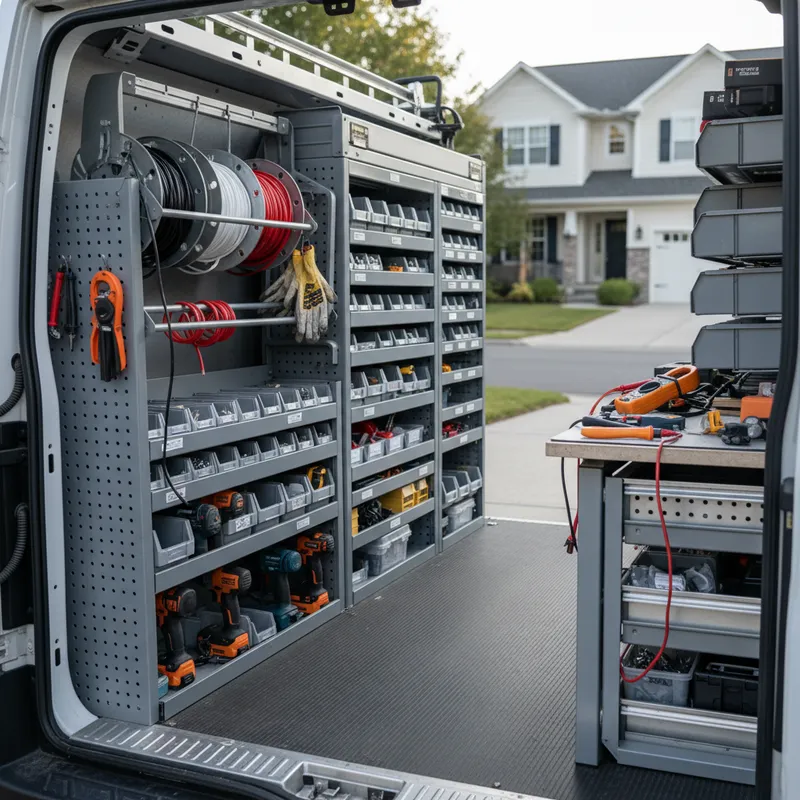
The vehicle is the wildcard. If you already own a capable truck or van, your startup costs drop considerably. If you’re buying something reliable and properly outfitted, factor $20,000 to $40,000 for a used commercial vehicle — more for new. Don’t scrimp here. A breakdown between jobs is lost revenue and a credibility hit.
Tools are another real expense. A decent multimeter, voltage testers, conduit benders, fish tape, drill set, and basic test equipment adds up fast. Budget $5,000 on the low end if you’re starting from scratch, more if you’re adding specialty equipment for commercial work.
The licensing and formation fees — the LLC, the application, the exam — are actually the cheap part. Under $600 total. The heavy costs are operational: insurance, equipment, and the vehicle.
The Path Forward
The sequence looks like this:
- Confirm you have (or can document) 4 years of electrical experience
- Gather and notarize your three reference letters
- Submit your notarized application and $310 fee to the Georgia State Board of Electrical Contractors
- Schedule and pass the licensing exam ($133)
- Form your LLC at ecorp.sos.ga.gov ($100)
- Get your EIN at irs.gov/ein (free)
- Register with Georgia Tax Center at gtc.dor.ga.gov
- Apply for your local occupation tax certificate (with E-Verify and SAVE affidavits)
- Get your insurance in place before you take your first job
The licensing piece is the long pole in the tent. Applications can take weeks to process, and the exam requires scheduling in advance. Start the licensing process first. Everything else — the LLC, the EIN, the local license — can run in parallel or after, since those steps move faster.
And if you’re deciding between Class I and Class II: go Class II. You’ll do the same exam prep, pay the same fees, and come out with a license that doesn’t limit your market. Residential work is a fine starting point. It’s not a ceiling.