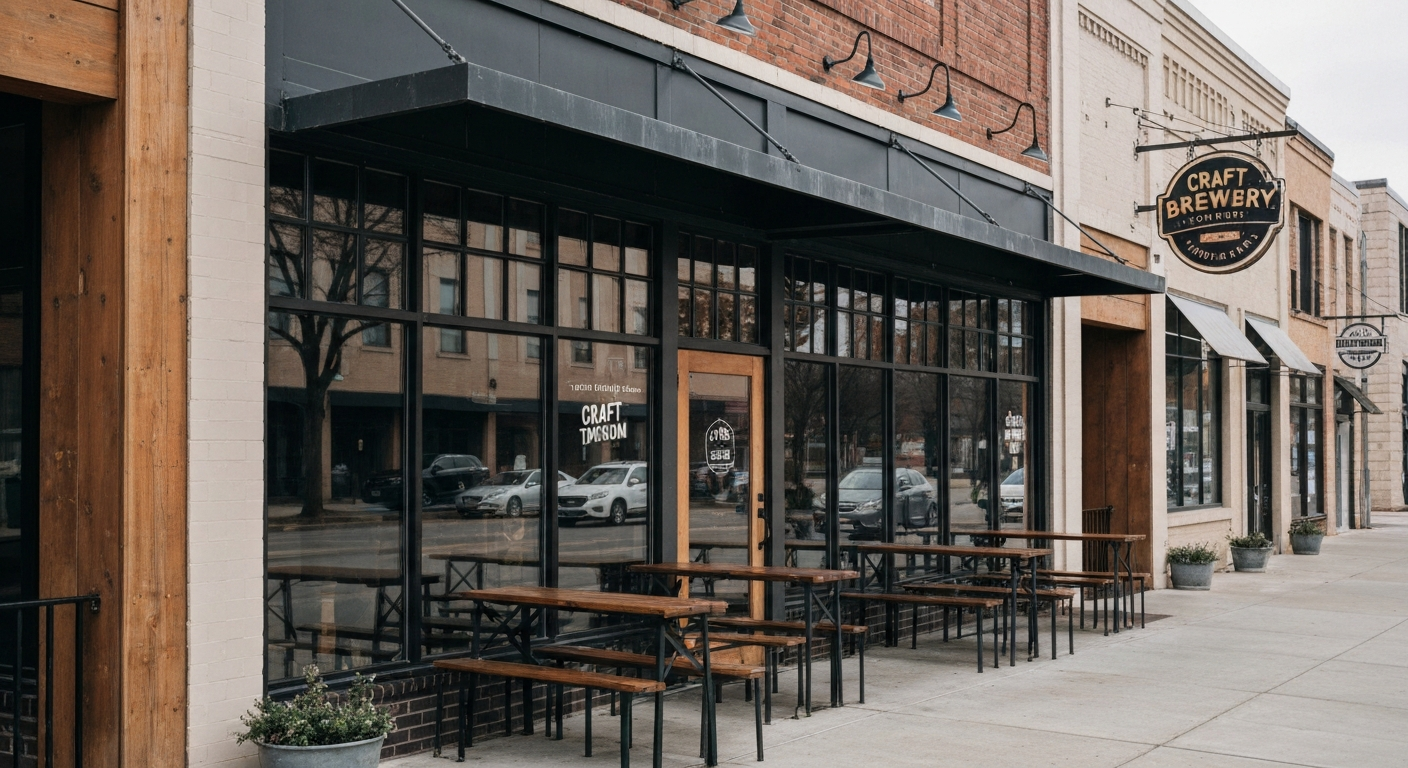
How to Start a Bar or Brewery Business in Georgia
How to Start a Bar or Brewery Business in Georgia
Opening a bar or brewery in Georgia isn’t just about finding a great space and perfecting your pour. Before you sell a single pint, you’ll work through a dual-licensing system that trips up a lot of first-time operators — one license from your local city or county, another from the state. Get the order wrong and you’ve wasted months. Get it right and you’ll have a clear path from concept to open sign.
This guide covers both paths: the traditional bar and the craft brewery with a taproom. The requirements overlap significantly, but breweries carry a few extra layers worth understanding before you sign a lease.
Georgia’s Dual Alcohol Licensing System
Georgia requires two separate alcohol licenses to legally sell drinks: one from your local government (city or county) and one from the Georgia Department of Revenue. These aren’t interchangeable, and you can’t get them simultaneously.
The local license comes first. The Georgia DOR will not process your state application until you have your local license in hand. That’s not a technicality — it’s a hard stop. Plan your timeline accordingly.
Local License Costs Vary Wildly
This is where Georgia gets complicated fast. There’s no statewide fee schedule for local alcohol licenses. Every municipality sets its own rates, and the differences are significant.
Atlanta sits at the high end. A beer-only license runs approximately $2,500. A full beer, wine, and spirits license — what most bars need — runs $5,000. That’s just Atlanta’s license fee, separate from everything else.
Outside Atlanta, costs drop considerably. Many smaller cities and counties charge $500 to $1,500 for comparable licenses. If you’re considering a location in, say, Gainesville or Warner Robins rather than Midtown, the licensing cost alone could be $3,500 lower. Worth factoring into your location decision, especially in the early lean months.
Contact your specific city or county’s licensing or revenue office before you commit to a space. Some municipalities also have caps on the number of alcohol licenses they’ll issue in a given area — another thing to check early.
State DOR License
Once you have the local license, you apply to the Georgia Department of Revenue for the state license. Fees vary by license type:
- Brewery/winery license: $500 to $1,500, depending on production capacity
- Mixed beverage/retail license for bars: fees vary by license category
The DOR’s Alcohol & Tobacco Division handles all state applications. You can find current fee schedules and application requirements at dor.georgia.gov.
The 30-Day Public Notice Requirement
Here’s the timeline detail that catches people off guard. After you submit your application — local or state — you’re required to post a public notice at your business premises for 30 days. This is a mandatory waiting period, not something you can rush through.
After the notice period, processing takes another 30 to 90 days depending on the license type and the jurisdiction’s current backlog. Add it up: you’re looking at 60 to 120 days minimum from application to approval. If you’re planning a grand opening, build that window into your schedule before you sign a lease.
Zoning Must Be Verified Before You Apply
Before any of the above matters, confirm your location is properly zoned for alcohol sales. Local planning or zoning departments handle this. A beautiful space in the wrong zone means starting over. Get a written zoning confirmation, not just a verbal assurance from a landlord.
Brewery-Specific Requirements
If you’re opening a taproom brewery — which is most craft brewery startups — your licensing situation has one more layer than a standard bar.
Georgia’s Taproom Sales Law
Georgia breweries can now sell up to 3,000 barrels per year for on-premises consumption in their taproom. This wasn’t always the case. Prior to the passage of Georgia’s so-called “Beer Jobs Bill,” breweries were limited to offering tours and tastings — they couldn’t actually sell pints for on-site consumption the way a bar does. That change opened the door to the taproom model that now defines most Georgia craft breweries.
The 3,000-barrel cap is generous for startup breweries. A 7-barrel system running at reasonable capacity produces well under that threshold annually. So for most small and mid-sized operations, the cap isn’t a practical constraint — but it’s worth knowing it exists.
Brewery Licensing: Two Licenses, Not One
A brewery actually needs multiple licenses running simultaneously:
Manufacturing license from the DOR — required for production. This covers the act of brewing commercially.
Separate retail license for taproom sales — your manufacturing license doesn’t automatically authorize you to sell drinks to the public. If you want a taproom, you need a retail license on top of the manufacturing license.
Both go through the DOR after you have your local approvals. The local license application should specify both the manufacturing and retail components if you’re operating a taproom.
Federal Brewer’s Notice
Before you brew a drop for commercial purposes, you also need a Federal Brewer’s Notice from the Alcohol and Tobacco Tax and Trade Bureau (TTB). This is a federal requirement, entirely separate from Georgia’s licensing system. It’s free to obtain but requires detailed facility and process information. Processing can take several weeks to a few months. Apply for this early — ideally while your local and state applications are in motion.
The TTB’s application is handled online through their Permits Online portal at ttb.gov.
Manufacturing Zoning
Brewing is a manufacturing operation. Most jurisdictions require manufacturing or industrial zoning for the production side of your facility, even if the taproom itself is in a commercial zone. Some cities have mixed-use or specific craft beverage zoning designations that accommodate both — Atlanta’s Westside, for example, has seen several breweries operate in industrial corridors with attached taprooms.
Confirm with your local planning department that your specific location can accommodate both production and retail. Don’t assume that because another brewery operates nearby, your parcel has the same zoning designation.
Business Structure and Tax Registration
You can’t get an alcohol license as a person. You need a properly formed business entity. For most bar and brewery owners, an LLC is the right choice — it separates your personal assets from business liability, which matters a lot in an industry where dram shop lawsuits are real.
Form Your LLC
File online at ecorp.sos.ga.gov through the Georgia Secretary of State Corporations Division. The filing fee is $100. You’ll also pay $60 per year for the annual registration (that’s a $50 fee plus a $10 mandatory service fee), due between January 1 and April 1 each year. Miss the April 1 deadline and there’s a $25 late penalty.
The annual registration isn’t optional. An LLC that falls out of good standing can create complications with your alcohol license renewals.
Get Your EIN
An Employer Identification Number is required to open a business bank account, hire employees, and register for taxes. Get one free at irs.gov/ein. Takes about 10 minutes online.
Register at the Georgia Tax Center
Head to gtc.dor.ga.gov to register for:
- Sales tax — Georgia’s base rate is 4%, plus local county additions that typically bring the total to 7-9% depending on where you’re located. Alcohol sales are subject to standard sales tax.
- Employer withholding — once you hire staff, you’re responsible for withholding state income tax. Georgia’s flat income tax rate is 5.19% for 2025, dropping to 5.09% in 2026.
Register before you open. You can’t legally collect sales tax without being registered to remit it.
E-Verify and SAVE Affidavits
These are mandatory Georgia requirements and they come up when you apply for your local occupation tax certificate — which you’ll also need alongside the alcohol license.
Under O.C.G.A. § 36-60-6, private employers with 11 or more employees must register for E-Verify and provide their user number. If you have fewer than 11 employees, you file an exemption affidavit instead.
Under O.C.G.A. § 50-36-1, applicants must verify lawful presence in the U.S. through a SAVE Affidavit. This requires notarization and a secure, verifiable document. Don’t show up to the licensing office without this — the application won’t move forward without it.
Insurance for Bars and Breweries
Alcohol businesses carry higher-than-average liability exposure. Your insurance needs reflect that.
Liquor Liability (Dram Shop Coverage)
Georgia has dram shop liability law. That means if you serve someone who then causes injury or property damage — say, a drunk driving accident — your business can be held liable. This isn’t hypothetical. Dram shop claims are how small bars end up in serious financial trouble.
Liquor liability insurance is non-negotiable. Many landlords and local licensing offices will require proof of it anyway, but even if they didn’t, you’d want it.
General Liability
Standard general liability coverage — typically $1 million per occurrence — covers slip-and-fall incidents, property damage caused by your business, and similar claims. This is baseline coverage for any commercial operation.
Commercial Property Insurance
Covers your physical space, equipment, inventory, and build-out improvements. For a brewery, your brewing system represents a significant capital investment. A contamination event or equipment failure without proper coverage can be catastrophic. Make sure your policy specifically covers brewing equipment and fermentation vessels, not just general “contents.”
Workers’ Compensation
Georgia requires workers’ compensation insurance once you have three or more employees — and that count includes officers and part-time workers. Most bars and breweries hit that threshold quickly. The Georgia State Board of Workers’ Compensation has employer resources at sbwc.georgia.gov.
Product Liability (Breweries)
If you’re manufacturing a product — beer — you need product liability coverage. This protects against claims arising from contamination, allergic reactions, or defective product. It’s separate from general liability and specifically covers the manufactured goods you’re putting into customers’ hands.
What to Budget
For a small bar: expect $3,000 to $10,000 per year in total insurance premiums across all coverage types. For a brewery with production equipment and product liability: $5,000 to $15,000 per year is a realistic range. Get quotes from brokers who specialize in hospitality or craft beverage businesses — they’ll know the right coverage structures and won’t leave gaps.
Startup Costs at a Glance
Here’s an honest look at what you’re spending before you open the doors. These are real numbers, not optimistic projections.
| Item | Cost |
|---|---|
| LLC filing (Georgia) | $100 |
| Annual LLC registration | $60/year |
| Local alcohol license | $500–$5,000 (varies dramatically by city) |
| State DOR alcohol license | $500–$1,500+ |
| County health department food permit (if serving food) | $100–$500 |
| Occupation tax certificate | Varies by locality |
| Insurance (annual) | $3,000–$15,000 |
| Build-out and equipment | $100,000–$500,000+ |
| Brewing system (7-barrel starter) | $75,000–$150,000 |
A few things worth calling out:
Build-out costs are the wildcard. A raw industrial space in a secondary market might get you operational for $150,000 total. A full bar build-out in Atlanta with a proper HVAC system, a commercial bar setup, and a kitchen can easily reach $500,000 before you’ve poured anything. Get contractor bids before you finalize your concept.
The 7-barrel brewing system estimate is for a turnkey system with fermenters and basic packaging equipment. Used equipment can cut this significantly. New systems from U.S. manufacturers like Stout Tanks or Psycho Brew, or imported systems, vary considerably in price. Factor in installation, glycol systems, and utility upgrades — those costs don’t show up in the equipment quote.
Don’t forget working capital. You’ll need cash reserves to cover operating expenses for at least three to six months before you’re cash-flow positive. That’s separate from everything in the table above.
The Order of Operations
To pull this together into a sequence:
- Verify zoning for your specific address — confirm it supports both your use type and any production activity
- Form your LLC at ecorp.sos.ga.gov ($100)
- Get your EIN at irs.gov/ein (free)
- Apply for local alcohol license — include E-Verify documentation or exemption affidavit, SAVE affidavit, and any required zoning confirmation
- Post 30-day public notice at the business premises after application is accepted
- Apply for state DOR license once local license is issued
- Apply for Federal Brewer’s Notice from TTB if you’re producing beer (start this early — it runs parallel, not after)
- Register at gtc.dor.ga.gov for sales tax and employer withholding
- Secure insurance before opening — lenders, landlords, and licensing offices will ask for proof
The whole licensing timeline, from first application to open sign, realistically runs four to six months if nothing goes sideways. Budget more time if you’re in a municipality with a backlog or if your zoning situation requires a variance.
Start with the local licensing office in your specific city or county — that’s where the process actually begins, and every other step depends on getting that right first.