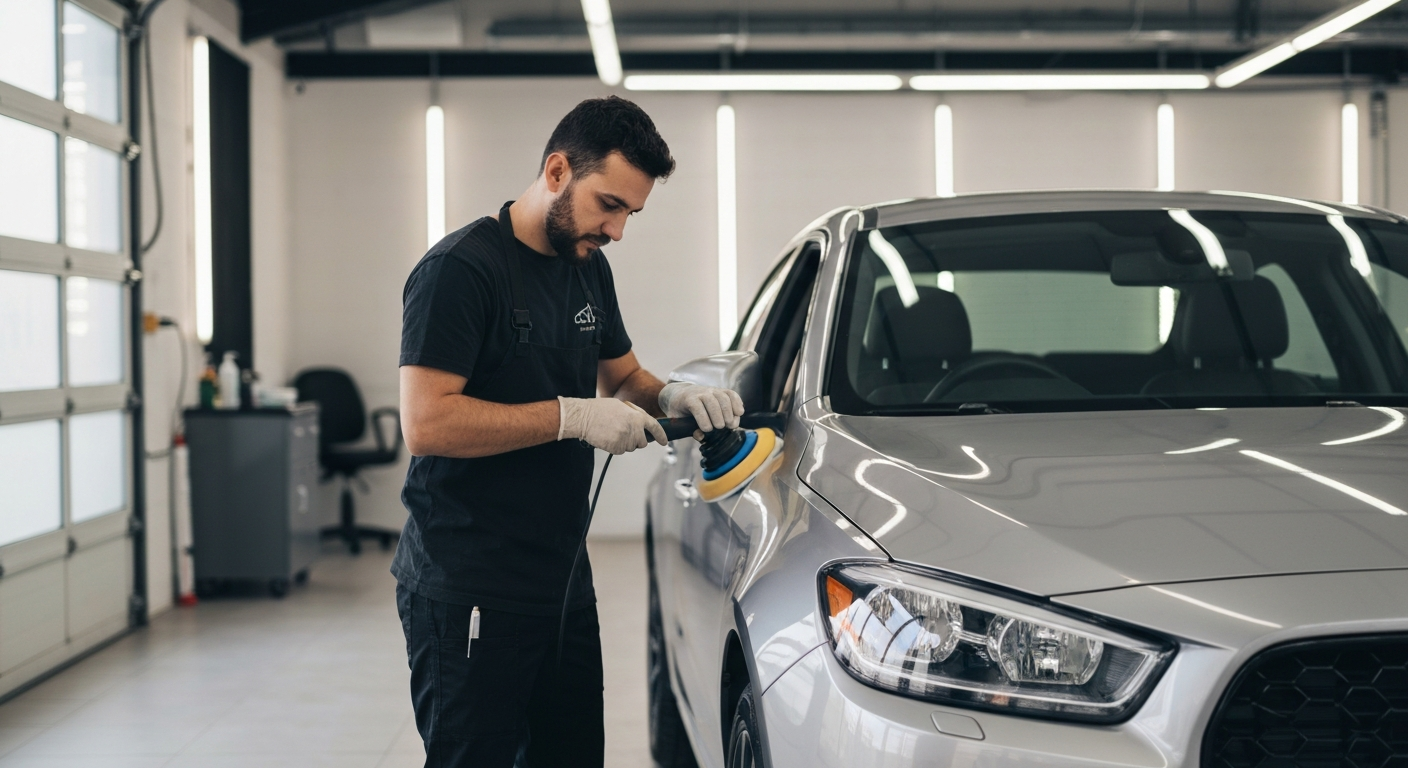
How to Start an Auto Detailing Business in Georgia
How to Start an Auto Detailing Business in Georgia
Georgia has over 8 million registered vehicles. That’s one of the largest vehicle populations in the Southeast, spread across metro Atlanta, Savannah, Augusta, and hundreds of suburbs and rural counties where people drive trucks and SUVs they actually care about. The market is real.
The state also doesn’t require a detailing license. No state board, no certification exam, no permit from the Georgia Secretary of State to wash and polish cars for money. That makes detailing one of the more accessible service businesses you can start here.
But Georgia does have environmental rules that catch detailers off guard — rules with federal teeth behind them. Getting those right is what separates a compliant, professional operation from one that gets an unexpected visit from an EPD inspector. This guide covers both.
Why Start an Auto Detailing Business in Georgia
The climate alone makes the business case. Georgia’s heat, humidity, and heavy pollen seasons mean cars accumulate grime, oxidation, and paint damage faster than in cooler, drier states. Customers who detail twice a year in Colorado might detail four times a year in Georgia just to keep up. Ceramic coating and paint protection film have real value in a state where UV exposure is relentless from April through October.
Startup costs are also manageable. A mobile operation — a reliable van or truck, a pressure washer, a dual-action polisher, a wet/dry vacuum, chemicals, and a water tank — runs roughly $2,000–$5,000 to get started. You’re not signing a lease, you’re not building out a facility, and you’re not waiting six months to open. A fixed-location shop with proper drainage, water reclamation equipment, signage, and a commercial build-out is a different proposition: expect $10,000–$50,000 depending on the condition of the space you’re starting with.
Neither path requires a state detailing license. Georgia doesn’t have one.
Step 1: Choose Your Business Structure
Form an LLC before you take your first paying customer. This isn’t generic advice — detailing specifically warrants it. You’re applying chemicals to paint finishes, working inside vehicles with leather and electronics, and handling cars worth anywhere from $20,000 to well over $100,000. One bad outcome (a swirl mark on a Ferrari, a chemical reaction on a matte wrap, a scratch from a pressure washer) without an LLC means your personal bank account is in the lawsuit.
File online at ecorp.sos.ga.gov. The filing fee is $100. Processing takes 5–12 business days standard; you can pay $100 for 2-day expedited or $250 for same-day if you need it faster.
After formation, you’ll pay an Annual Registration of $60/year (that’s a $50 fee plus a mandatory $10 service fee, effective September 6, 2025). Annual registrations are due between January 1 and April 1. Miss the April 1 deadline and there’s a $25 late penalty. Put it on your calendar now.
Step 2: Get Your Local Business License
Georgia has no statewide business license. What you need is an Occupation Tax Certificate from the city or county where your business operates. For mobile detailers, that’s typically the city or county where you’re based — not every location you service.
Cost varies by jurisdiction and usually scales with revenue. Budget $50–$200/year for most Georgia cities and counties. Atlanta, Savannah, and other larger cities tend to be on the higher end; smaller counties are often cheaper.
Two things are mandatory on your application that most people don’t expect:
E-Verify Affidavit: Required under O.C.G.A. § 36-60-6 for all business license applications in Georgia. If you have 11 or more employees, you must register with E-Verify and provide your user number. Fewer than 11 employees? You file an exemption affidavit instead. Either way, you can’t skip this step — no city clerk will accept an application without it.
SAVE Affidavit: Required under O.C.G.A. § 50-36-1. You must verify lawful presence in the United States. This requires notarization and a Secure and Verifiable Document — a driver’s license or passport works. Budget time for this; you can’t just email it in.
If you’re running a mobile operation out of your home, check your local zoning ordinances before you file. Many Georgia cities restrict home occupation permits in ways that affect detailers specifically: commercial vehicle parking in residential driveways, chemical storage in garages or sheds, and signage. Some cities allow it with conditions; others don’t allow commercial vehicles over a certain weight at residential addresses at all. Find out before a neighbor complains.
Step 3: Environmental Compliance — The Requirement That Catches Detailers Off Guard
This is the section most detailing guides skip. Read it carefully.
The Federal and State Framework
Under the federal Clean Water Act, it is illegal to discharge wash water into storm drains, roadside ditches, or waterways. Wash water from auto detailing contains surfactants, petroleum residue, heavy metals from brake dust, and phosphates from cleaning products. That’s not water you can let run down the driveway into a storm drain — the storm drain goes directly to a creek or river without treatment.
Georgia’s Environmental Protection Division (EPD) administers the state’s NPDES (National Pollutant Discharge Elimination System) permit program. Commercial car washing operations that discharge water may need an NPDES permit, or they must connect to a sanitary sewer system (which goes to a treatment plant). The distinction matters: storm drain = illegal discharge. Sanitary sewer connection = compliant.
The HVPS Inspection Program
Georgia EPD runs a program specifically called Highly Visible Pollutant Sources (HVPS). Auto-related businesses — car washes, detailers, auto repair shops — are explicitly targeted. Inspectors visit to check for stormwater pollution: where is the water going, what’s in it, and what controls are in place. This isn’t theoretical enforcement. If your operation is visible from the road and water is running off your property into a drain, you’re a candidate for an inspection.
Fixed-Location Requirements
If you’re running a shop, your drainage setup is the first thing an EPD inspector will look at. Wash water must go to the sanitary sewer — not the parking lot drain, which in most commercial properties connects to a storm system. You’ll likely need:
- A floor drain connected to sanitary sewer (not storm drain) in your wash bay
- A water reclamation or recycling system — these capture and filter wash water for reuse, dramatically reducing discharge volume and cost
- Possibly a grease trap or oil/water separator depending on the types of services you offer and your local sewer authority’s requirements
- Proper chemical storage and secondary containment for petroleum-based products
The build-out cost to get drainage right is part of why fixed-location startup costs run so high. Don’t cut corners here — the fines for illegal discharge are not minor.
Mobile Detailing and Environmental Compliance
Mobile detailers have a genuine structural advantage on environmental compliance — but only if they use it.
Because you control where you work, you can choose surfaces that handle runoff appropriately. Detailing on pervious surfaces like grass or gravel allows wash water to filter through the ground naturally rather than run off into a drain. Many mobile detailers use water reclamation mats or containment berms — portable systems that capture all runoff during the wash so it can be disposed of properly. These aren’t expensive: entry-level containment mats run $200–$600.
The key is that “mobile” doesn’t automatically mean compliant. If you’re detailing in a client’s concrete driveway and wash water is running down to the street and into a storm drain, you have the same problem a fixed-location shop has. The advantage is that you can control it — you just have to make the choice to do so.
Chemicals are another consideration regardless of your setup. Products containing phosphates, heavy metals, or petroleum must be handled, stored, and disposed of per EPD guidelines. Read the SDS (Safety Data Sheet) for every product in your kit. Some iron removers, wheel cleaners, and degreasers have specific disposal requirements.
For questions about your specific situation, Georgia EPD’s website is epd.georgia.gov. For stormwater permitting questions, their Water Protection Branch handles NPDES inquiries.
Step 4: Insurance
Auto detailing without proper insurance is a liability trap. The numbers don’t lie: you’re regularly working on vehicles worth more than most people’s annual salary. One mistake — and mistakes happen even to experienced detailers — without insurance coverage means you’re personally paying for a paint correction or a replacement panel on a car you can’t afford.
Here’s what you need:
General Liability Insurance is the baseline. It covers bodily injury and property damage claims that arise from your business operations. For a detailing business, expect $500–$1,000/year for a basic policy. This is not optional.
Garage Keepers Liability covers damage to customers’ vehicles while in your care, custody, or control. This is especially critical for fixed-location shops where vehicles are on your property overnight or for extended periods. It also matters for mobile operations — if a client’s car gets damaged during service, your general liability policy may not cover it without this endorsement.
Commercial Auto Insurance is required if you’re using a vehicle for business purposes. Your personal auto policy almost certainly excludes commercial use. A van with a pressure washer and supplies that you drive to clients? That’s commercial use. One accident without the right policy and your insurer can deny the claim entirely.
Workers’ Compensation is mandatory in Georgia once you have 3 or more employees, including part-time workers. This is state law under the Georgia State Board of Workers’ Compensation (sbwc.georgia.gov). Detailing involves chemical exposure, equipment operation, and physical labor — workers’ comp claims in this industry happen. Georgia’s rates run approximately 10% below the national median, which helps.
Budget $1,200–$3,000/year for a comprehensive insurance package. That range covers a solo mobile operator on the low end and a multi-employee fixed-location shop with a full suite of coverage on the high end.
Step 5: Register for State Taxes
Auto detailing services are subject to Georgia sales tax. This surprises some new detailers who think of sales tax as applying only to physical goods — but services that involve application of products to tangible property (which detailing does) are taxable in Georgia.
Register at the Georgia Tax Center (gtc.dor.ga.gov) before you start collecting money from customers. You’ll register for a sales tax permit and receive a filing schedule (monthly or quarterly, depending on your volume).
Georgia’s state sales tax rate is 4%, but the combined rate with local taxes typically runs 7–9% depending on your county. Fulton County, for example, has a different combined rate than Cherokee County. Check the rate for your county and make sure you’re charging correctly.
If you’re hiring employees, also register for employer withholding tax through GTC. Georgia has a flat state income tax rate of 5.19% for 2025 (dropping to 5.09% for 2026). There’s no local income tax anywhere in Georgia, which simplifies payroll slightly.
Before you do any of this, get your EIN (Employer Identification Number) from the IRS at irs.gov/ein. It’s free, takes about 10 minutes online, and you’ll need it for your LLC, your bank account, and your state tax registrations.
Costs at a Glance
No padding here — these are your real numbers:
| Item | Cost |
|---|---|
| LLC filing (one-time) | $100 |
| Annual Registration (LLC) | $60/year |
| Occupation Tax Certificate | $50–$200/year |
| Equipment — mobile | $2,000–$5,000 |
| Equipment — fixed location | $10,000–$50,000 |
| Insurance | $1,200–$3,000/year |
| Workers’ comp (3+ employees) | Varies by payroll |
| Total first-year — mobile | ~$4,000–$9,000 |
| Total first-year — fixed location | ~$20,000–$60,000 |
The mobile number is achievable for someone who already has a suitable vehicle. The fixed-location number assumes you’re leasing space that needs meaningful build-out for proper drainage. A turnkey facility that already has a compliant wash bay and drainage system costs less to convert — but those don’t come available often.
Mobile vs. Fixed: A Real Strategic Choice
The conventional wisdom is that mobile is easier. That’s not entirely wrong — no lease, lower startup cost, no build-out. But mobile has genuine challenges: weather cancellations, dependence on client access to water (or hauling your own), the physical demands of working outside in Georgia summers, and the logistical overhead of scheduling across multiple locations per day.
Fixed-location shops trade those challenges for different ones: higher fixed costs, the environmental compliance burden of proper drainage, and the need to generate enough volume to cover rent every month.
The environmental angle is actually where mobile shines, if you run it right. Proper containment equipment, smart surface selection, and responsible chemical handling let you operate cleanly without the infrastructure cost a fixed shop requires. That’s a genuine business advantage, not just a startup-cost story.
Georgia doesn’t make it hard to start an auto detailing business. File your LLC, get your occupation tax certificate, sort out your environmental controls before your first wash, and get properly insured. That’s the whole list. The detailers who run into trouble are usually the ones who skipped the environmental piece — and found out about it from an inspector instead of a guide.